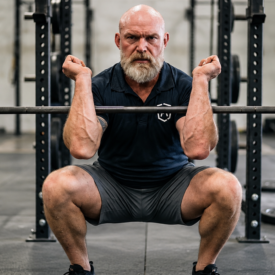
Breaking Up With HAM
- Posted
- by Coach Jake
The Myth of Maximum Effort
For years, I prided myself on pushing myself — and everyone around me — not just to our limits, but past them. My mantra was simple: if it was hard for me, it should be impossible for you.
I wasn’t chasing wins or losses. I just wanted to outlast you. Every workout, every session, was built to be as brutal as I could make it. Weight vest on. Train in the heat of the day. Push through a hangover. No easy days, no rest days — the full David Goggins, Cameron Hanes playbook.
And then, like it does for almost everyone who lives by that code, my body and mind broke.
The Myth of Maximum Effort
There’s a seductive idea in fitness culture: if you train as hard as humanly possible, you become bulletproof. You’ll rise to any occasion, win any physical altercation, handle anything life throws at you.
There’s an identity wrapped up in it too — I was “hardcore,” and that label became part of who I was.
Is there truth in it? A little. Pushing to your absolute edge teaches you where that edge actually is. There’s something satisfying about grinding out a win through sheer attrition.
But your ethos writes checks your body can’t cash forever. The bill always comes due.
Where the Bill Comes Due
1. Injuries Compound
When you train through everything, small nicks and scrapes turn into full-blown injuries. Ignore pain long enough and the thing you love gets taken away from you — not by choice, but by force.
2. Intensity Without a Plan Is False Confidence
I once stepped onto the mat for a jiu-jitsu match assuming my fitness alone would carry me. I had no strategy. My opponent armbarred me, and I didn’t even understand how it happened.
Going hard had made me ignorant of my own gaps. People call this “mental toughness.” Often it’s actually a glaring hole in your preparation.
3. You Lose the Ability to Pace Yourself
Going all-out all the time means throwing everything at every session. The smarter competitor holds something back, knowing more is coming. Spend it all now, and there’s nothing left when it matters.
4. Too Much Stimulus, Not Enough Recovery
Your body only has so much capacity to recover. It needs just enough stimulus to trigger adaptation — not maximum stimulus.
Train balls-to-the-wall constantly and your recovery becomes inconsistent, which makes your results inconsistent. You leave gains on the table while thinking you’re doing more.
5. The Compounding Cost of Missed and Wrecked Days
You can get away with this in your twenties. As you age, the injuries and bad workouts pile up, progress stalls, and you feel worn down more often than not.
Fitness is supposed to build health — the ability to play with your kids, feel good, show up fully in your life. If your training is constantly breaking you down, you’re not actually healthy, no matter how “fit” you look.
What Changed
I still train hard — but hard within limits now, not hard without them. That distinction took me the better part of 15–16 years to learn.
These days:
- I train with a specific purpose for that session — nothing more, nothing less.
- I make sure I’m recovered enough to hit my next effort.
- I listen to my body. If something starts feeling off mid-session, I modify on the spot. It’s not worth being sidelined from training, jiu-jitsu, or anything else I love.
The paradox is this: the harder you go all the time, the weaker you ultimately become.
More purpose, less maximal effort. That’s the actual formula for longevity — in training, and in life.